
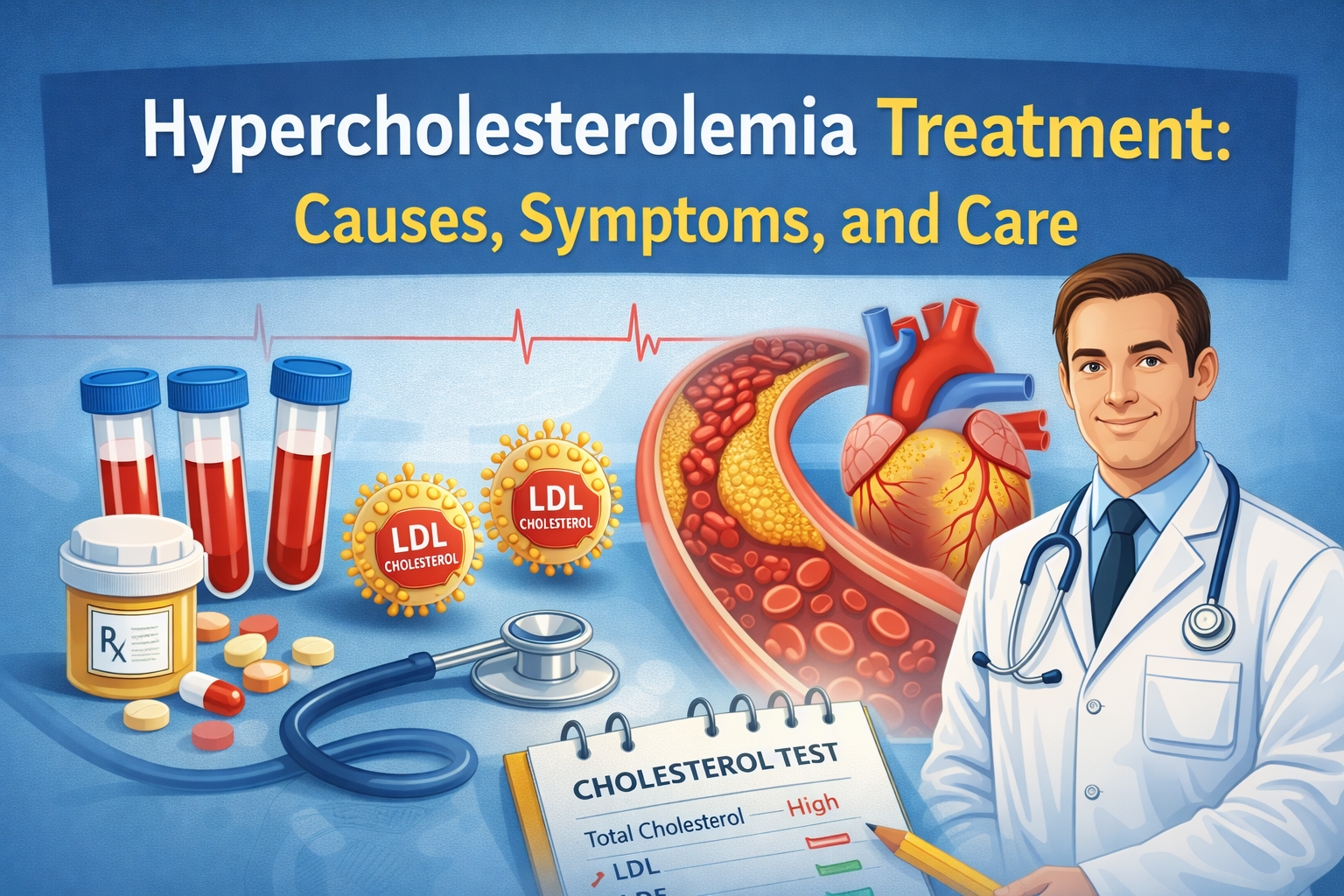
Hypercholesterolemia is a condition where the level of cholesterol in the blood becomes too high. Cholesterol is a fatty substance that the body needs in small amounts to stay healthy. However, when cholesterol levels rise too much, it can cause serious health problems. Early diagnosis and proper Hypercholesterolemia treatment can help prevent heart disease, stroke, and other complications.
At Medicare Pharmacy & Medical Center, our experienced Hypercholesterolemia doctor provides personalized care to help patients manage cholesterol levels and improve overall health.
What Is Hypercholesterolemia?
Hypercholesterolemia means having high cholesterol in the blood. Cholesterol moves through the bloodstream in two main forms:
- LDL (bad cholesterol) – builds up in the blood vessels
- HDL (good cholesterol) – helps remove excess cholesterol
When LDL levels are too high, cholesterol can block arteries and reduce blood flow to the heart and brain. This increases the risk of heart attack and stroke.
What Causes Hypercholesterolemia?
Hypercholesterolemia can develop due to many reasons, including:
- Eating fatty and fried foods
- Lack of physical activity
- Being overweight
- Smoking
- Drinking too much alcohol
- Family history of high cholesterol
- Aging
- Health conditions like diabetes or thyroid problems
Some people are born with high cholesterol, known as familial hypercholesterolemia, and need long-term care from a Hypercholesterolemia specialist.
What Are the Symptoms of Hypercholesterolemia?
Most people with hypercholesterolemia do not notice any symptoms. It is often discovered during routine blood tests.
In advanced cases, symptoms may include:
- Chest pain
- Shortness of breath
- Tiredness
- Yellow fatty patches around the eyes or skin
Because symptoms are often silent, regular check-ups with a Hypercholesterolemia doctor are very important.
How Is Hypercholesterolemia Diagnosed?
Hypercholesterolemia is diagnosed with a blood test called a lipid profile. This test checks:
- Total cholesterol
- LDL (bad cholesterol)
- HDL (good cholesterol)
- Triglycerides
If your levels are high, a Hypercholesterolemia specialist may suggest lifestyle changes or treatment based on your risk factors.
Hypercholesterolemia Treatment Options
Hypercholesterolemia treatment depends on cholesterol levels, age, and overall health. Treatment usually includes:
1. Lifestyle Changes
Healthy habits are the first step in managing hypercholesterolemia.
2. Healthy Diet
A balanced diet can lower cholesterol naturally. Patients are advised to:
- Eat more fruits and vegetables
- Choose whole grains
- Avoid fried and processed foods
- Reduce red meat and full-fat dairy
3. Regular Exercise
Physical activity helps increase good cholesterol and reduce bad cholesterol. Walking, cycling, or swimming for 30 minutes a day is beneficial.
4. Medications
If lifestyle changes are not enough, a Hypercholesterolemia doctor may prescribe medicines to control cholesterol safely.
Foods That Help Lower Cholesterol
Foods recommended by a Hypercholesterolemia specialist include:
- Oats and whole grains
- Nuts and seeds
- Fatty fish with omega-3
- Beans and lentils
- Olive oil
- Low-fat dairy products
Long-Term Care for Hypercholesterolemia
Long-term care focuses on:
- Maintaining a healthy weight
- Quitting smoking
- Managing stress
- Limiting alcohol intake
- Regular follow-ups with a Hypercholesterolemia doctor
These steps help keep cholesterol levels under control and protect heart health.
When Should You See a Hypercholesterolemia Doctor?
You should consult a Hypercholesterolemia doctor if:
- You have a family history of high cholesterol
- Your blood tests show high cholesterol
- You have heart disease, diabetes, or high blood pressure
- You want preventive care
Early treatment can prevent serious health problems.
Hypercholesterolemia Care at Medicare Pharmacy & Medical Center
At Medicare Pharmacy & Medical Center, our skilled Hypercholesterolemia specialist offers complete care, including diagnosis, treatment, and long-term monitoring. Our goal is to provide simple, effective, and personalized Hypercholesterolemia treatment for every patient.
Conclusion
Hypercholesterolemia is a common condition, but it can be managed successfully with early diagnosis and proper care. Regular testing, healthy eating, exercise, and guidance from a trusted Hypercholesterolemia doctor can help maintain healthy cholesterol levels and reduce future risks.